Friday, May 28, 2010

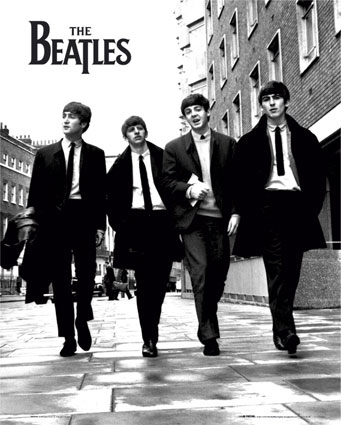
The Beatles


The Beatles were an English rock band that was created in Liverpool in 1960 and has become one of the most successful, popular, and influential musical groups of all time. The group consists of John Lennon, Paul McCartney, George Harrison, and Ringo Star. The Beatles began their musical career with "Skiffle" and 1950s rock and roll. But the group later worked in many genres ranging from folk rock to psychedelic pop. They also incorporated classical and cultural events into their music. The nature of their enormous popularity, which first emerged as the "Beatlemania" fad, transformed as their songwriting grew in sophistication. The group came to embody the progressive ideals, and counterculture revolution of the 1960s. The Beatles achieved UK mainstream success in late 1962 with their first single, Love Me Do. In the wake of the moderate success of "Love Me Do", "Please Please Me" their first album reached number two in the UK singles chart after its January 1963 release. Ten songs were recorded for Please Please Me accompanied on the album by the four tracks already released on the two singles. The band's third single, "From Me To You", came out in April and was also a chart-topping hit. It began an almost unbroken run of seventeen British number one singles for the band. On its release in August, the band's fourth single, "She Loves You", achieved the fastest sales of any record in the United Kingdom. up to that time, selling three-quarters of a million copies in under four weeks. It became their first single to sell a million copies, and was the biggest selling record in the United Kingdom until 1978.. With The Beatles, their second album, was released in late November ahead of the impending single "I Want To Hold Your Hand" with the song excluded in order to maximize the single's sales. With The Beatles became the second album in UK chart history to sell a million copies, a figure previously reached only by the 1958 South Pacific soundtrack.

Friday, May 21, 2010

One Tree Hill

The reason I watch this show is above:)


This show is my new obsession and craze. I can't seem to get enough of it, and I've watched the whole first season (yep, that's 23 episodes) in two days. This addiction began one day after school when I randomly decided to watch the show on TV. It was an episode from the middle of the fourth or fifth season, so I did not really understand much about the characters, but I was hooked. The drama, and intensity of the show just pierces you, even if you are a first time viewer. I immediately knew that I had to watch every episode of the show to figure out who these people were. The story line is great and all the actors are exceptional. Basically it is a story about a group of friends who live in Tree Hill, North Carolina. Lucas and Nathan Scott are the main characters, and are half brothers, as they share the same dad. Dan Scott, their dad, abandoned Lucas and his mother when she was pregnant with him, and is therefore one of the villains of the show and is constantly ruining people's lives. Lucas and Nathan hate each other at first, because they are both very competitive because they're on the same varsity basketball team, and because they never really had the chance to get to know each other. However, they eventually grow to become good friends and brothers. Peyton, Brooke, and Haley are the main actresses in this show, and they are great as well. Peyton is a brooding artist who must constantly cope with her mother's death. Brooke is the outgoing, popular, and eccentric cheerleader, and Haley is the genius, "tutor girl", who manages to snag one of the most well attractive guys at Tree Hill High School, Nathan Scott. I probably wouldn't be so in love with this show if it wasn't for the relationship between Nathan and Haley. It's safe to say I'm a huge "Naley" fan, and love every scene that they're in together. They end up getting married in high school, and somehow managing to make it work (well, at least so far I'm on the second season). I'm excited to continue watching the show and to see how they grow as characters and to see what new twists and turns the story line will take.


Wednesday, May 19, 2010

Frances Kellor


Frances Alice Kellor was an American sociologist who was born on October 20, 1873 in Columbus, Ohio. She graduated from the Cornell Law School in 1897 and studied at the University of Chicago and the New York Summer School of Philantropy. Frances Kellor was involved in social settlement and other social reform movements of the 20th century. She made efforts to improve migrating conditions for Black immigrants (especially women) from the South to the North, and European immigrants. She Organized the National League for the Protection of Colored Women, which educated African American women who had moved to the North and helped them find jobs and houses. She was a member of the New York State Immigration Commission. Kellor investigated the poor living and working conditions of immigrants and made the state bureau aware of this. The Bureau then initiated worker safety and educational services.Kellor was also an advocate for immigrants. They were treated horribly when they first arrived to the United States, and Kellor was responsible for greatly improving their living conditions.

Animal Farm

The story begins with, Old Major, a prize-winning boar who gathers the animals of the Manor Farm for a meeting in the barn. He tells them about a dream he had, in which humans did not opress or mistreat the animals on the Manor Farm. He tells the animals, that this dream is the ideal utopia, and leads them to accomplish this dream, and he also teaches them a song called the Beasts, in which he describes his dream.The animals are enthusiastic about Old Major's dream and are excited to begin to accomplish it. But he dies three nights after the meeting and three younger pig; Snowball, Napoleon, and Squealer use Old Major's principles to come up with a plan called Animalism. Late one night, the animals manage to defeat the farmer Mr. Jones in a battle, running him off the land. They rename the property Animal Farm and dedicate themselves to achieving Major's dream. The cart-horse Boxer devotes himself completely to Old Major's dream, and has a motto of, "I will work harder."
At first, Animal Farm flourishes. Snowball works at teaching the animals to read, and Napoleon takes a group of young puppies to educate them in the principles of Animalism. When Mr. Jones reappears to take back his farm, the animals defeat him again, in what comes to be known as the Battle of the Cowshed, and take the farmer's abandoned gun as a token of their victory. As time passes, however, Napoleon and Snowball increasingly argue over the future of the farm, and they begin to struggle with each other for power and influence among the other animals. Snowball concocts a scheme to build an electricity-generating windmill, but Napoleon solidly opposes the plan. At the meeting to vote on whether to take up the project, Snowball gives a very good speech, but Napoleon attacks snowball, and takes over the farm.
Napoleon now quickly changes his mind about the windmill, and the animals, especially Boxer, devote their efforts to completing it. One day, after a storm, the animals find the windmill toppled. The human farmers in the area declare smugly that the animals made the walls too thin, but Napoleon claims that Snowball returned to the farm to sabotage the windmill. He stages a great purge, during which various animals who have allegedly participated in Snowball's great conspiracy—meaning any animal who opposes Napoleon's uncontested leadership—meet instant death at the teeth of the attack dogs. With his leadership unquestioned Napoleon begins expanding his powers, rewriting history to make Snowball a bad guy. Napoleon also begins to act more and more like a human by sleeping in a bed, drinking alcohol, and engaging in trade with neighboring farmers. The original principles of animalism did not permit that, but Napoleon did these things anyways.
Then, Mr. Frederick, a neighboring farmer, cheats Napoleon in the purchase of some timber and then attacks the farm and dynamites the windmill, which had been rebuilt at great expense. After the demolition of the windmill, a pitched battle ensues, during which Boxer receives major wounds. The animals rout the farmers, but Boxer's injuries weaken him. When he later falls while working on the windmill, he senses that his time has nearly come. One day, Boxer is nowhere to be found. According to Squealer, Boxer has died in peace after having been taken to the hospital, praising the Rebellion with his last breath. In actuality, Napoleon has sold his most loyal and long-suffering worker to a glue maker in order to get money for whisky.
Years pass on Animal Farm, and the pigs become more and more like human being; walking upright and wearing clothes. Eventually, the seven principles of Animalism and inscribed on the side of the barn, become reduced to a single principle reading “all animals are equal, but some animals are more equal than others.” Napoleon entertains a human farmer named Mr. Pilkington at a dinner and declares his intent to ally himself with the human farmers against the laboring classes of both the human and animal communities. He also changes the name of Animal Farm back to the Manor Farm, claiming that this title is the “correct” one. At the end of the book, they are looking through the window of the animal farm, the pigs look more like humans than pigs.
This book was very interesting and the way George Orwell compared the animals to an actual significant event in history was compelling. It helped me to understand the historical event better and this made it more interesting. This book showed that the animals slowly evolved into humans, forgetting completely about Old Major's original dream, and allowing the struggle for power and authority to get in the way of a more prosperous society. The book also demonstrated the fact that socialism fails, and that complete power corrupts all. This is portrayed in many examples through out history, from dictatorships to socialism to the Russian tsars.
Sunday, May 2, 2010

SAT Part II

So yesterday, when I went in to take the actual test I will admit I was a bit nervous. I mean your whole future is inside that intimidating booklet of SAT questions. Your whole future waits for you at the desk you choose to sit in. Do I sit in the row with smart people? Will their smart energy waves be sent back to me? These questions sound absolutely ridiculous right about now, but yesterday that was honestly what was going through my head. That seemingly simple little test holds so much power. It decides your fate. What college you will attend, and what you do with your life. These are things that no one can take lightly. In fact, that seemed to hit me for the first time when I saw an 11 year old taking the SAT in a classroom filled with 16 and 17 year olds. My first reaction was “wow, poor kid, his parents probably pushed him into this and make him feel a ton of pressure to do good”. And although this is partly true, I feel like you need to have some sort of self-motivation to go through with something like this. So I’m sure that eleven-year-old kid, just like me, wants to find success, but wants an easy way to do this. However, success is rarely beneficial if you found it easily. So back to the test, I finally chose a seat, and sat down with ten number two pencils (yes ten, one for each section haha) and began to take the test that would seal my destiny. And I can’t tell you how I did. I never really know. I felt decent about it. Of course, there were those questions that left me stumped, and there were those that I answered instantly, but if you asked me to guess what I’d got I’d tell you I have no idea. It could be a 200, it could be a 2200. Who knows? But after the test was over, two things were running through my mind.
1.)GET ME OUT OF THIS PLACE!
2.) That actually wasn’t that bad for being a five hour test. And as much as I hate admitting my parents were actually right; if that SAT prep course helped me with anything, it got me in the mental zone and focus for taking a five hour test.

SAT Part I

I took the SAT on Saturday morning, and this will sound crazy, but it wasn’t as bad as I expected. By no means am I saying I managed to get a perfect score, or even a good score for that matter. All I’m saying is that this five-hour test turned out to sound more treacherous than it actually was. And I think part of that was the fact that I had taken this horrible SAT prep course at the Kaplan Center. It was every Saturday and Sunday, so I pretty much dreaded. Just think, waking up early every single day of your weekend, driving to Iowa City, and learning. We do enough of that Monday-Friday, and we definitely don’t need anymore of that on the weekends. I was furious with my parents when I found out that they had signed me up for it. They invested a lot of time and money into this course, and me being the magnificently lazy person that I tend to be, did not take the course seriously whatsoever. We would take practice tests of Saturdays that would start at 10:30 and end at 2:30 and they were horrible. I would give up halfway through the test and end up with horrible scores. However, on the last practice test, I went in with the mindset that I would not give up and that I would be focused on the test the whole time, and I did significantly better

Sunday, April 25, 2010

The Cold War

In the years immediately after World War II, America had begun to reconstruct itself after many years of difficulties. For the first time since the 1920s, America had finally begun to regain its prosperity. Our country had just finished World War II victorious. Our troops were back home, the unemployment rates were down, and the economy was steadily improving. Circumstances seemed to be great, however, as the Cold War began, American people began to live in fear and uncertainty. In fact, there was a name for this specific time period: The Second Red Scare. Some of the greatest fears of Americans during this time were atomic weapons, communism, and threats from the Soviet Union.
As apparent in document B, this obsession with preventing communism in America had become something Americans were willing to sacrifice everything for. After World War II the era of McCarthyism became very popular. As stated in Document A, we were also fearful of what investigators would do to Americans. In fact, thousands of Americans were accused of being Communists or communist sympathizers and were thouroughly investigated by the government. As also stated in Document B, due to this obsession and fear of communism, many people suffered loss of employment, destruction of their careers, and even imprisonment. McCarthyism was a widespread social and cultural phenomenon that affected all Americans and was the source of a great deal of debate and conflict in the United States. McCarthyism accurately represented the terror and fear Americans had of communism entering the country.
Document D speaks about the Public Law 627, that President Eisenhower enacted. Also known as The Federal-Aid Highway Act of 1956 it was enacted on June 29, 1956, when President Eisenhower passed it.This law used $25 billion for the construction of 41,000 miles of Interstate Highways over a 20-year period, it was the largest public works project in American history to that point. This act directly related to our fears of the Cold War. Eisenhower stated that his purpose for passing this law was for national defense. In the event of an invasion by another country, our military would require good roads to be able to quickly transport troops around the country. He also insisted that one out of every twenty miles of road be laid straight so that it could be used as an airstrip in a state of emergency. Following completion of the highways the cross country journey that took the convoy two months in 1919 was cut down to two weeks.
Another thing that Americans feared during this era was the Soviet Union. According to document E, one of our greatest fears was an atomic bombing from the Soviet Union. In fact, this document speaks about the disadvantages that we face with the coming of the new missile age. And it asks a very controversial question: should we wait for the Soviet Union to bomb us, or should we do it first? The Soviet weapons program began in 1943 during World War II, under Igor Vasilievich Kurchatov. This program required reports collected by members about the Manhattan Project in the United States It was very successful because of the sympathies of many for the wartime Soviet Union fighting Nazi Germany. This fear that we had of Soviet Spies and atomic weapons leads us to Document F. A picture that depicts our governments only concern at the time; missile programs. By the early 1960s The Air Force's BOMARC air defense missile had seven squadrons along the nation's eastern and northern borders. We also wanted to establish a nationwide missile defense system, but after 15 years of controversy, the program was canceled in 1972 as a result of the Anti-Ballistic Missile Treaty signed with the Soviet Union. Document H also discusses our obsession with defense spending. It greatly increased during the years of the cold war. In fact from 1949 to 1951 it went up by almost 20%. According Document G, important things like education had taken a backseat to our country’s defense and war against communism and the Soviet Union.
American’s fears at this time seemed to destroy their prosperity and excellent economy after World War II. Rather than distribute government spending equally, they placed all of their emphasis on our nation’s defense, in fear that the Soviet Union would attack. Americans constantly lived in fear of the Soviet Union. Whether it was their threats for a potential nuclear war, threat to spread communism, or Sputnik, their orbiting Satellite, this was an era in which we allowed the Soviet Union to control our actions.